Travel: An Overview of Snaefellnes National Park on the West Coast of Iceland

Snaefellsnes National Park is a beautiful, secluded area on the western coast of Iceland, only two and a half hours away from Reykjavik. It was voted one of the most romantic areas to get away in Iceland, and is the perfect place for both hiking in the summer and Northern light viewing in the winter. We stayed two days in this area and I absolutely fell in love. I wish we could have stayed an extra day in order to explore more of this region, but we were short on time in general. There are many things to see in this national park, and some of the most iconic images come from this area. The experience is unparalleled by other national parks we have visited, coupled with the seclusion and moody weather (even mid-summer!). Here, I will highlight a few sights but to be honest, none of these photographs do it justice and you really have to go for yourself to believe it.

Note: the sights are listed in order if you drive around the national park counter-clockwise, which is the direction that you approach it from Reykjavik (the south). The best way to get to the Snaefellsnes area (and all around Iceland) is by renting a car or campervan. We rented a car from Hertz which had the best deal at the time. Just a side note, there is plenty of gravel roads and F-roads in Iceland so you want to rent an F-road approved car if you want to reach the most remote of places. Also, we got car insurance for peace of mind since flying gravel is a common occurrence and we weren’t willing to risk car dents and broken windshields.

Related Posts:

Gerduberg Cliffs

A wall of columns make up this famous cliff.

These cliffs are encountered on the way to Snaefellsness National Park via a tiny road splitting from the main highway to the right. Parking wasn’t an issue as this place is usually deserted, allowing you to revel peacefully at its glory. Evenly spaced, dark grey basalt columns made from lava rock line the cliff walls and have baffled scientists for many years. It isn’t so much the fact that the columns extend for miles but rather, the fact that the evenness in width of each column makes it seem as if this natural beauty was carved by hand. The explanation comes from the way in which the lave rock must have cooled evenly. Small indentations in the grass show a path by which you can climb to the top of the cliffs to get a better view of the valley below.

Ytri Tunga Beach

This beach is comically famous in island as it is the only yellow sand beach present. To which Mike replied, “So like every beach in California?!” I suppose to an islander who is used to black sand beaches, this is a sight to be seen. It is still worth a visit as this is the stomping grounds for different breeds of seals. We visited during golden hour and the seals were playing in the water, bobbing their heads along as Mike and I climbed rocks to see them. Although we were originally unsure whether the “sameness” of this beach to one you would find in sunny San Diego is worth the drive, I was pleasantly surprised at how much we enjoyed our sunset there. We must have watched the seals for an hour, before heading off to dinner.

Budakirkja

Budakirkja set against the mountains in Snaefellsnes National Park.

This black church is similar to many churches in island, so if you’ve already seen one, there is no need to pull off the side of the road to see this one. However, it does mark the start of an eight-hour hiking trail that I wish I was able to do. It is hardly mentioned in the blogs online or in travel books, but it travels from Hotel Budhir to Hellnar. We did end up doing a portion of it, hiking from Anastarpi to Hellnar, but when we return to this region (which we surely will!), I would like to set aside the proper time to do the hike that starts from this church.

A bit of a ways at the beginning of the hidden trail. You can see the worn in grass which marks the path for the hike. All you need to do is walk away from the church towards the ocean.

Bjarnafoss

Such a beautiful waterfall. I can only imagine how much stronger it would be in the Spring.

This grand waterfall is so close to the road that you can see it on the road. The sign to the right of the road is small and easy to miss, but it is definitely turning back around for. There is a short hike that gets you closer to the falls, but not right up to the tippy top. Pro advice: a tiny picnic area hidden among the trees at the base of the waterfall makes this a great place to eat lunch.

The trail Mike is standing on leads to a hidden picnic table behind the trees.

Anastarpi

Bird-watching from the Cliff Viewpoint.

I’ve written about what can be found in Anastarpi in my previous post highlighting the hike from Anastarpi to Hellnar. This tiny town is a great place for bird-watching from the Cliff Viewpoint. It also has the famous Bdar Saga Statue that was built from rocks and towers over the town. You can climb the stone bridge and take a photograph that makes you look like you are high-up in the air, too. And I wrote in that post about the pizza we had for lunch, which I totally recommend. If you have a few days in the national park, I would really recommend hiking from here to Hellnar, as it is a short 1-hour trek and would break up the site-seeing quite nicely.

Bdar Saga Statue looking over the town.

Londrangar Viewpoint

Snaefellsnes is a bird-watcher’s paradise. There is no shortage of cliff areas to watch birds from.

There are many viewpoints along the highway running around Snaefellsness National Park. This one is just a few steps from the lot. It isn’t much different from the bird-watching that can be found in Anastarpi, but the rock formation was sure worth the two-minute detour.

Vatnshellir Cave

The entrance to the cave, although you must take a tour to see inside.

The Vatnshellir Cave is an 8,000 year old lava tube created during a nearby crater’s volcanic eruption. As the lava flowed down a hill onto the lava river, it cooled on the surface as the lava river continued to drain out, thus creating a roof-top over the existing cave. One company does tour guides for the cave and they are the only ones with a permit to enter. That means that you need to do a tour with a guide to see the cave. We decided not to join the tour as we had many other sites on our list. It doesn’t seemed to be booked in advance, which is good, as we saw cars pulling up and signing up for the next tour. You do need to wear proper gear which they provide (such as a helmet), and they ran 45-minute tours every hour at the price of 3500 ISK per adult.

Djupalonssandur Beach

The view of the beach from the top. If you look closely, you can see the ship-wreck remains – bright orange bits of rusting copper.

This beach was another area in which I sadly did not set aside enough time for. I was expecting nothing more than a black sand beach, but to my surprise, there were multiple hiking trails to take from the car park and this beach actually spans a large area. We did do one of the shorter hikes which took us down to the black rock beach, where the remains of a ship wreck can still be seen. To the right of the beach are steps that leads one to a small pool where previous settlers (mostly sea people) had to walk to to get access to drinkable water. There were two other hikes that I really wanted to see, each of which took 1-2 and 3-4 hours respectively. I will definitely be back here to explore! I think it would be best to set aside a half-day to see this beach at leisure.

The hike to the left of the beach took us to this secluded pool where sea travelers had to go to get drinking water.

Saxholar Crater

The Saxholar Crater is nothing but a huge hole in the ground that is viewable after climbing a surmountable number of steps. The cardio work was fun, don’t get me wrong, but the view was anti-climactic and honestly not worth the climb (unless you’ve never seen a crater before?). It is a five-minute detour from the road, if you just want to see it. But Iceland had so many other things to see!

Svortuloft Lighthouse

This was definitely not worth driving to as it required a 1 hour driving detour from the main road on a gravelly path (which meant a 2 hour detour total) just to see a lighthouse. There was, however, cool signs at the end that gave a bit of history about how the sea travelers who landed in this part of Iceland survived. Some of the old dwellings are still visible as mounds in the soil, and there is a scary looking well that you can look at. Mike was brave enough to walk into it, but it was too claustrophobic for me to even try. To be fair, we were coming to the end of our very long day of sight-seeing and I was getting cantankerous from the hunger pains signaling the need for dinner, and soon … so there’s that.

Mike bravely entering the under-ground well.

Kirkjufellsfoss

This waterfall and the background mountain reminds me of Mount Crumpit from Who-ville where The Grinch lived. It is so fairytale like that I wouldn’t believe it was a real place if I didn’t see it myself. The fall itself isn’t as grand as it seems from the photographs but the background can’t be beat on a clear day (luckily, it did clear up in the latter half of the afternoon). There is a lot on the side of the road and it is a minute’s walk from the car park to the fall itself. I had to open this entire post with this photograph, although here is another view of it without the mountain in the background from the base of the fall. Not as grand, right? It is one of the most famous sites for Google stock photos, and looks even prettier (or so it appears in other people’s pictures) with the Northern Lights in the background.

If you enjoyed this post, subscribe to my newsletter to receive all things travel! Notifications of newly published travel guides, itineraries and tips will be delivered directly to your inbox.

Afterthoughts on: “10 Steps for Financial Success for New Grads”

This post may contain affiliate links. Please see my disclosure to learn more.

This past week, I had the pleasure of hopping on an InstaLive session with Dr. Unorthodoc once again. In this week’s Live, we talked about my recent post: 10 Steps for Financial Success for New Grads. She even threw in two bonus recommendations, which you can surely review on her Instagram @dr.unorthodoc. In typical fashion, I’ve spent the last few days conjuring up a few afterthoughts that I wanted to share in this post.

Regarding Financial Success:

Financial success” can mean different things to different people. The vision could include accumulated wealth, fancy things, or financial freedom. For me, it is certainly the latter. A quote that I recently read sums up my idea of success:

“A nice car and a big house are the old status symbols. The ultimate flex is freedom. Time freedom, location freedom, and financial freedom.”

Obviously what was success to my parents’ generation is not financial success to me. The same goes for a peer of mine who might hold different values, be in a different situation, or have a different upbringing. There is no judgement in that fact. It is simply an observation. When I talk about my own journey, I don’t want to exclude people and make them feel like the information is irrelevant to them. I want them to tailor my experiences to their own needs and versions of financial success. Because of this, not every tactic we discuss will apply to everyone and certainly the order in which you do things may change. We went into some of those details in the InstaLive so feel free to check it out!

Regarding Where to Spend Your First Paycheck:

Some of my classmates spent their first paycheck investing in the stock market or contributing to their 401k’s. Some saved up for their first home’s down-payment or upgraded their cars. I used my first paycheck to pay for a financial planner. (The two recommendations we mentioned in the podcast were Travis Hornsby from Student Loan Planner and Andrew Paulson from White Coat Investor.)

This is a prime example of how we can use our money to get closer to our ideas of financial success (wealth, stuff, and freedom). For me, I wanted to be free from debt or anything that would prevent me from living as I please in a day-to-day basis.

Regarding Financial Literacy:

What this also shows is differing levels of financial literacy. I think that’s what makes my financial journey so relatable is the fact that I started at the bottom with zero financial literacy. Meaning, I have been through every possible stage of wealth accumulation so many people can relate to the different phases of my financial journey.

I have classmates who have more money awareness than I did at graduation. Heck, I had friends who had more money period! One of my closest friends spent his mornings in dental school investing in the stock market. I was not even exposed to that world at that point in my life. I also did not have access to generational wealth being a zero generation immigrant.

I am not saying this in an accusatory way or anything like that. But, certainly, they were better versed and can invest in things right out of school because they were at a stage in their life where they were already set up for that. Just because I started at the bottom doesn’t mean every has to hire a financial planner. You might already know everything a financial planner has to tell you!

Remember: the path to financial success is mutli-factorial. The level of financial literacy, current phase of wealth accumulation and your personal definition of financial success all play a role towards your path post grad.

Regarding Student Loans

The best advice that I can give is to choose a path that works for you.

Not everyone should aggressively pay student loans back, and I don’t mind going on record saying that! Those whose definition of financial success falls under wealth accumulation or having nice things would be better off with the loan forgiveness program, granted that they invest their money in preparation for the tax bomb at the end of the 20-25 years. Those who yearn for freedom or value frugal living would benefit from paying it off aggressively.

The question new grads need to answer is, “What lifestyle do I want to live?”

Since my values are centered around gaining financial freedom, the reasons why I decided to pay my student loans off aggressively are as follows:

  • I don’t like having debt looming over my shoulder. It causes me stress and holding on to debt has a psychological and emotional toll on me. Even when it comes to a to-do list, I am the type of person that prefers to check off tasks as quickly as possible, in order to alleviate worry. If you asked my husband, my famous saying that would follow me to the grave would be, “Let’s get it over with!”. Regardless of whether the task at hand is enjoyable or not, the part that matters more to me is getting it done. At the end of the day, it gives me more peace to get rid of my debt.
  • I am not the type of person to only do one thing for the rest of my life. Right after graduation, I knew that I wasn’t going to be the type of dentist who would happily work a 9-5 shift Monday through Friday, running a practice until I was 65 years old. I am a creative person and I wanted to have the choice to quit dentistry all together, whenever I want. If anything, the last four years since graduating has been proof that the 25 year loan forgiveness is not for me. I’ve already quit once (here I wrote about How to Gain Enough Financial Independence to Quit Your Job) which happened to be a job that did not bring me joy at a time when I wanted to recreate myself (we can blame that on Saturn’s return.) I’m the type of person who wants to be a baker some days, a writer other days, a pet caregiver on my time off, and a world traveler not tied down by a consistent job. I want to work remotely in my pajamas at home sometimes, and interact with people other times. I want to think up of ideas as much as work with my hands. Because this is the person I am, I decided having no debt gave me more freedom to live wherever, work however, and be whomever. This required a deep understanding of the true me, which is where the real work lies.
  • Lastly, I am a numbers gal and while there is wealth growth potential to doing the loan forgiveness programs, it appealed to me that paying the loans off in ten years time is still cheaper than waiting 20-odd years – cheaper by more than $100,000! Of course that profit margin increases even more if you pay it back quicker than 10 years, which is what I am trying to do!

Regarding Emergency Funds:

I like emergency funds because it gives me that layer of added security and ease of mind. That being said, emergency funds don’t have to be that traditional idea of putting away a monetary amount in a savings account or in a safe under your home. I don’t like that idea anyway because that prevents you from growing your wealth. You should at least invest it as a hedge against inflation. I like to make every single dollar work for me and I love the idea of passive income. There are many ways to have an emergency fund without reducing the chances of wealth accumulation.

  • Open a brokerage account and invest your savings into something. Even a mutual index fund like SPY, VTI, or VTSX will be better than keeping it in a savings account, especially if you don’t know much about stocks. Your brokerage account can be you investing in stocks, but also a source of funds in cases of true emergency.
  • We travel hack a lot so that we never have to spend our hard-earned dollars on our travels. Which means we have multiple credit cards open at the same time that have maximum limits. Since we pay all our credit cards in full every month, we have those funds readily available for emergencies. Between my husband and I, we have over $100k in unused credit card spending (I alone have $83k) and that is a source that we can turn to in case of a true emergency.
  • Depending on your loan situation, you could use pivoting your plans to gain access to more money during tough times. For example, even though I am paying off my loans aggressively, I remained with REPAYE the first three year’s to benefit from the program’s promise to pay half of the interest fees. My minimum monthly payment was $900 per month, but I was paying $6,500 or more per month. When 2020 hit and my husband lost his job for 10 months, we paid only the minimum payments to my loans and used the left-over to cover his income loss. Luckily, the interest rate since the pandemic has been at a miraculous 0%. Regardless, this was a good example of using loan repayment pivoting in cases of emergency.
  • Just like you can gain access to money by selling stocks, you can do the same if you have equity in real estate. We own a commercial/residential property and can sell it if things go south, immediately gaining access to our equity.

Regarding Investments:

We briefly touched on investments here but I think the InstaLive had better content within the banter that Dr.Unorthodoc and I had. I just want to summarize with the following: Investments are GREAT but require a bit of heeding. Do your research, don’t let emotions carry you away, and use your head.

Regarding the big picture:

I am all about balance – as you can tell from my lifestyle. Paying loans off aggressively does not hinder us from

-maxing out our 401K

-buying a property

-growing our wealth and investing in stocks

-building businesses

Do a bit of everything! It makes life more fun and interesting. I view life as one big social experiment. Novelty is good for the soul and honestly, I know very few people who can do the grind and truly call themselves happy.

I am choosing happy.

XOXO

How to Deal with Paper Clutter

This post may contain affiliate links. Please see my disclosure to learn more.

There is a really quick way to deal with paper clutter. That is, to get rid of it. As in, ALL of it.

Paper clutter used to be my biggest problem, next to books and clothes, although not necessarily in that order. But I’ve devised a system for dealing with paper clutter and it’s quite simple, really. Get rid of paper as soon as you can. Keep it out of your home. Digitize it and then begone. Keep a filing system for only a handful, and declutter it twice a year. Paper can become really agonizing and stacks up quite quickly without us realizing it. Have you ever tried to shred ‘important documents’ before? If you have, then you’ll know.

I recommend the following:

Don’t take home flyers.

You know, the one they hand out at events or stick to your windshield? Or worse, the business cards one may pass along to you. I know it’s hard to do, but practice saying ‘no thank you’. For those sneakily slipped beneath my windshield wipers, I find a public trash can right away.

Unsubscribe to mail.

Mail can get a bit unruly. The trick is to limit the mailman’s load. Unsubscribe to all magazines, flyers, companies, etc. Even the non-paid subscriptions are a hassle. I’ve found that these companies somehow regain access to my address and weasel their way into my mail box. I just keep calling and telling them to put an end to it. Do you really need to look at more of the things they want you to buy?

Go Paperless.

Almost every company has a paperless option by now. When possible, we choose paperless. The reason being, these companies are usually the ones that send account information home. Bank accounts, electric bills, and mortgage updates – all paperless for us! The reward is two-fold; less chances of someone else getting access to your information, and less mail to sort through and shred.

Open mail right away, sort and discard.

The most common thing people do when they get the mail is put in a basket ‘for later’. Man, what an eyesore! We don’t even keep a basket. Mail that gets brought in is looked at and discarded ASAP. Those that have tasks associated with them (making a payment or appointment) are completed as soon as possible which kills two birds with one stone – it gets the job done and it clears the table of hideous mail. Voila!

Digitize, whenever possible.

This, I had a problem with for a long time. I was quite fond of paper, even though this post wouldn’t hint at it otherwise. My class notes I kept after college. Letters from friends in middle school were tucked away in a drawer. I have essays that I wrote once, diary entries meant just for me. All of that is now gone. I realized that the more I threw away, the easier it was to let go. For those I couldn’t bear to part with, I scanned and digitized. Since scanning takes work, I decided it would behoove me to be very selective, but also, to vow never again to collect as much paper as I did. Call it a lazy person’s curse, but I hardly wish to keep paper things anymore.

Keep the most important pages in a filing cabinet.

There are a few papers that you can’t digitize, then throw away. My degree, for example. My license. My naturalization papers and my passport. These we keep in a filing cabinet. My motto is: Out of sight, out of mind. This one is my favorite minimalist option, although CB2 has a number of options, too. Pro tip: Declutter twice a year to prevent stock piling. Perhaps what you once thought was necessary no longer feels that way after de-cluttering.

Photo by Brandi Redd on Unsplash

Travel: Hiking in Landmannalaugar, A Remote Gem in Iceland

Landmannalaugar is a space shaped from fairytales. The silica-rich mountains of the area are made of rhyolite, a type of volcanic rock, and streaked with the colors of a rainbow – red, blue, pink, green and yellow. It was historically a geothermal retreat for settlers, and the little pool at the base of the mountain was named The People’s Pool. Today, it still remains a bath for adventurers wishing to rest tired limbs after a long day of hiking. It’s no wonder this place is known as Iceland’s Pearl of the Highlands.

How to Get to Landmannalaugar

Starkly contrasted against a black lava field called Laugahraun, this gem of a place is tucked away in the heart of Fjallaback Nature Reserve and takes about two and a half hours to get to from the closest town (three hours if you’re coming from Reykjavik). We stayed at Fludir near the Golden Circle, and took the Northern Route, which according to the reviews was the easiest.

The first hour of the drive was on paved road, and I would recommend filling up the gas tank at Fludir or Arnes, as there will be no gas stations for miles around. After an hour, the road gradually changes to gravel, and then to F-Roads. You need to make sure you have an F-Road allowed car when you rent one at the airport. The F-roads were rough and really slowed down our driving. Some people were zooming along in their trucks, but even they were bouncing past the rocky terrain. After about an hour of F-Roads, the last stretch was on gravel, which was much easier to manage. Thirty minutes more until we got to the first parking lot. There are technically two parking lots but to get to the second, you must cross a river. We came on a summer day and the river tide was low. Still, we chose to park in the first lot since the walk to the second only took five minutes. We didn’t want to risk ruining our rental car. I have heard that getting to Landmannalaugar from the North is the only way to avoid a river crossing.

The river crossing on a summer day in July. Low tide!

Despite this, it is worth the drive, even for a day trip. If you wish to make the most out of your drive, there is a campsite at the base of the mountains. Or better yet, Landmannalaugar is the start of an epic, three-day trek called Laugavegur Trek, which is rated the number one multi-day hike option in Iceland.

The Campsite at Landmannalaugar

There is a campground at Landmannalaugar and a decent number of people were posted up. Since there are multiple day-hikes in the area, I assume it was common for people to stay overnight. The campsite has a stand where you can buy snacks and supplies. At this same stand, you’ll need to purchase a wrist band to use the facilities. Since we were hiking all day (and chugging water on those steep ascents), we did pay for a restroom pass. It became useful when we changed out of our hiking gear and into our bathing suits for the People’s Pool later on. It isn’t necessary to purchase anything ahead of time or to reserve a camping spot. We saw a number of people walk up to the window and ask to buy a spot for the night. Nomad living and campervan life is common in Iceland, so most of the people just post up where they please. I can very much understand why Landmannalaugar is one of those spots. To note, there are also beds to be rented out in two huts behind the supply store (if camping isn’t your thing). A peek into the building windows indicated that there was a working kitchen and common room with electricity and running water. I would look into how to reserve these huts ahead of time.

The campsite from far away. The huts can also be seen from here.

Laugahraun Lava Fields

We started our hikes behind the aforementioned huts. Into the lava fields we went. There was an initial hilly climb that took less than a few minutes to complete. After that, it was an easy stroll for half of the loop trail. The best thing about this area is that all trails are marked by color-coded posts. The lava fields were demarcated with orange/green/white posts – since they are also the start of two other trails.

The Lava Fields.

There was a lot to be seen in the lava fields. Crazy rock formations and a stunning sea of black volcanic rock surrounded you completely. It felt like being on Mars, or being the lone survivor after the world’s doom. Eventually, you will come to a clearing that gives you a great view of the beautifully colored mountains. The view from the bottom is just as amazing as the view from the top, so I would stop to gander. Halfway around the loop trail is the opportunity to veer right. Tall grass beckoned us towards the Brenneinsteida Loop (green posts) and we hugged the mountain side going in a counter-clockwise direction. It seemed that clock-wise was the popular decision, but I do think counter-clockwise was the easier path since the steepest of hills were climbed upwards rather than downwards. This isn’t to say that sliding down gravelly hills is impossible, but I would prefer to do steep descents with walking sticks which I didn’t have at hand on that day. In the end, the counter-clockwise decision on our part was pure luck, and like most things in our life, we do have a knack for going against the grain.

Black rock juxtaposed against white snow.
The valley view before you leave Lagauhraun to chase Brenneinsteida.

Brenneinsteida Loop

From the lava fields, you hug a grassy trail around the mountain’s base. Even in mid July, there was a patch of melting snow on the back side of the mountain where the light doesn’t hit it as much. Hiking boots are a must for this trail, although hiking poles are not. The melting snow is nothing but a short patch and if you’d like to stray from the trail a bit, you could cross the tiny stream and walk in the grass. From here you can cross the plain and there is a trail that goes into the mountains on the right. However, we hugged the mountain on the left until we reached a very steep hillside for ascent. It was incredibly brutal, but the whole way up, I was thanking the heavens that I was going uphill instead of downhill. My fear was that thee would be a similar hill on the other side of the mountain, but luckily it was more gradual and easier to descend. Like I said, clock-wise is the way to go.

The melting snow mudpile you’ve got to maneuver around.

After the steep ascent that took no more than 10 minutes for us to climb, there is a series of upward slopes with areas of flat terrain in between, giving us a good number of breaks. I found myself constantly stopping and turning around, as well as looking to my sides. There was beauty to be seen everywhere and I have never seen such magical colors come out of the Earth before. In geothermal pools, yes. But not from mountains!

Mikey taking in the views from the top.

At the very top of the mountain, there is a view of the lava fields below, and of Blahnukur Trail (Blue Mountain). It was breath-taking. If you have it in you, you can continue this loop to the Blahnukur Trail. A few hikers at the top mentioned that there is a river crossing required (maybe up to the knees, you must remove your shoes, and the glacial water is freezing cold!) and a scramble up some scree on the initial hill. (If you were doing the hike clock-wise, the scree scramble would be at the end of Blahnukur Trail, on the way down, which in my opinion is worse). Other than those two things, the trail was described by others as fairly moderate and straight-forward. The mountain man giving us advice had a 6-month old baby strapped to his chest – which either says something about his abilities at scrambling, or the level of difficulty of the hike. We decided it was the former, and skipped Blahnukur due to the fact that we still had half of the lava fields to do. If we were camping overnight, I may have done it on a different day.

The view of Blahnakur Mountain from the peak of Brenneinsteida Trail. The wall of scree is visible, and the river crossing is right in front of the lake, hidden by the hill in the foreground. The trail wraps around the mountain side and looks moderate after the steep start.

The People’s Pool

After we made our way through the second half of the lava fields (the latter portion has more rocky terrain and isn’t as easy as the first half), we decided to take a dip in the ever-famous People’s Pool. We changed in the restrooms and walked the plank over to the natural, geothermally heated pond. It is not as nice as the Reykjadalur Hot Springs and since it’s more of a pool rather than a river, you have to be okay with stagnant water. Mossy greens float in the water and it isn’t clear in color. Rocks cover the bottom of the pool, so do bring sandals if you’ve got tender feet like me. I was okay wading through the rocks but it did hurt and it took me a while to meander to the warm part of the pool.

There is a changing deck with stairs leading into the water. It’s a bit frigid until you get to the part of the pool where the running water enters it – these are the sources of geothermal heat. Which is a great spot to meet other travelers and converse about the beauty of Iceland. Sometimes, it does require a bit of moving around, as areas tend to get too hot, depending on the rate of water flow. It was exactly what our muscles needed! I was even okay with smelling like geothermal water (rotten eggs) on the entire car ride home!

The heated areas are easy to spot.

This is definitely one of our top five experiences in Iceland. I know that it’s far from Reykjavik but it’s well worth the drive. Next time we’re back, we’ll save time for a three-day trek down the Laugavegur trail, perhaps even connecting to Fimmvorduhals Trail for a total of five days. This area is not to be missed!

If you enjoyed this post, subscribe to my newsletter to receive all things travel! Notifications of newly published travel guides, itineraries and tips will be delivered directly to your inbox.

J. Hannah’s Newest Nail Color, “Compost”, Is the ‘Ugliest Color In the World’ and I Am DIGGING It.

This post may contain affiliate links. Please see my disclosure to learn more.

First and foremost, I am a lover of all things misunderstood and socially unaccepted. It’s in my hard-wiring, perhaps in recognition of my own youthful quandaries as an immigrant, introvert, and straight-arrowed studious female. I have a soft spot for defending the outcasts and arguing the other side. For example, I decided in my teen years that my favorite number would be thirteen, donning it on my soccer jerseys because the movie ‘Freaky Friday’ had all my classmates hating on the number. I chose it because “it wasn’t fair”. And when my mother asked what color I wanted to paint my room after we moved for the tenth time in my life, I mortified her by picking a dirty greige-green, the color of mossy detritus. It doesn’t come as a surprise, then, that I equally love J Hannah’s newest polish release named similarly after my self-described teenage room. In fact, I adore it.

Compost

The color, called Compost, was fashioned after Pantone 448C – a color that market researchers agreed upon as The Ugliest Color in the World. A mix between olive-green and brown, Pantone 448C was originally invented by the marketing agency to slap onto the face of cigarette boxes to deter users from continuing their smoking habit. The message was plain and clear: stay away from this hideous substance, like tar dripping down one’s throat, or the color of ashen decaying lungs after years of smoke. But rather than repulse from this cursed tint, J. Hannah instead embraced the color and revived it as something sophisticated, without changing it.

On Instagram, she writes:

“A study in Jolie-Laide, ‘Compost’ is a statement in the nuanced line between the revolting and the luxurious, between the hideous and the refined. A reminder to not flatten beauty’s complexity into a single note. (In other words, if you know, you know.)”

J. Hannha’s Instagram

For you see, this Compost color is, to me, a beautiful color indeed. It is the color that I seek on my travels abroad, the one I am drawn to in nature and calmed by. Likewise, it is the base shade in my home – a color that sums up the beige, grey, green, and brown hues. I present to you a personal color study of Compost, that hopefully by the end, has you DIGGING it, too.

It reminds me of the first signs of life, in the form of lichen and moss, on our most recent trip to Iceland.
It reminds me of mountain terrain in the fjords of New Zealand.
It reminds me of Fall in Germany, the foliage around the Neuschwanstein Castle.
It reminds me of Alaskan Hills,
And the California Coast.

It reminds me of Michael’s hazel eyes, when the morning light hits it just right.

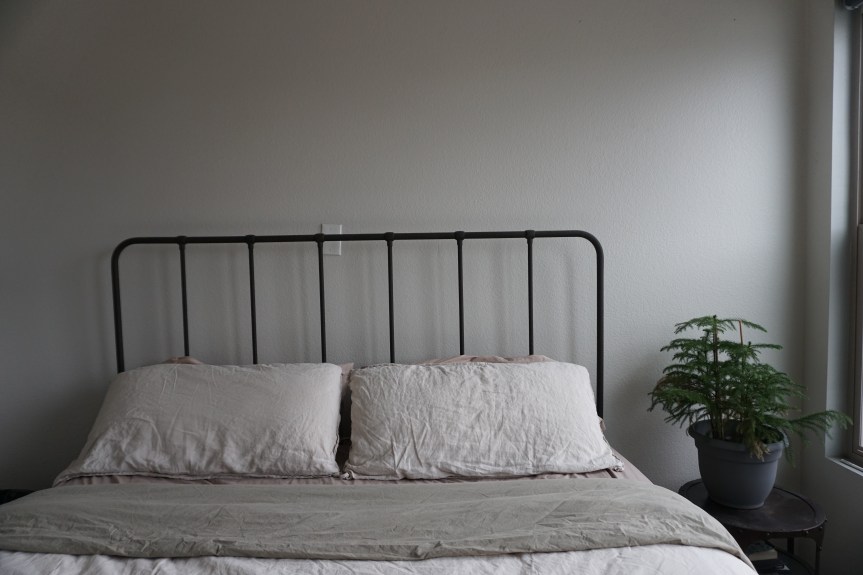
It is the color of our Parachute Bed Sheets, or this linen set,
menuaw18-aprilandmay
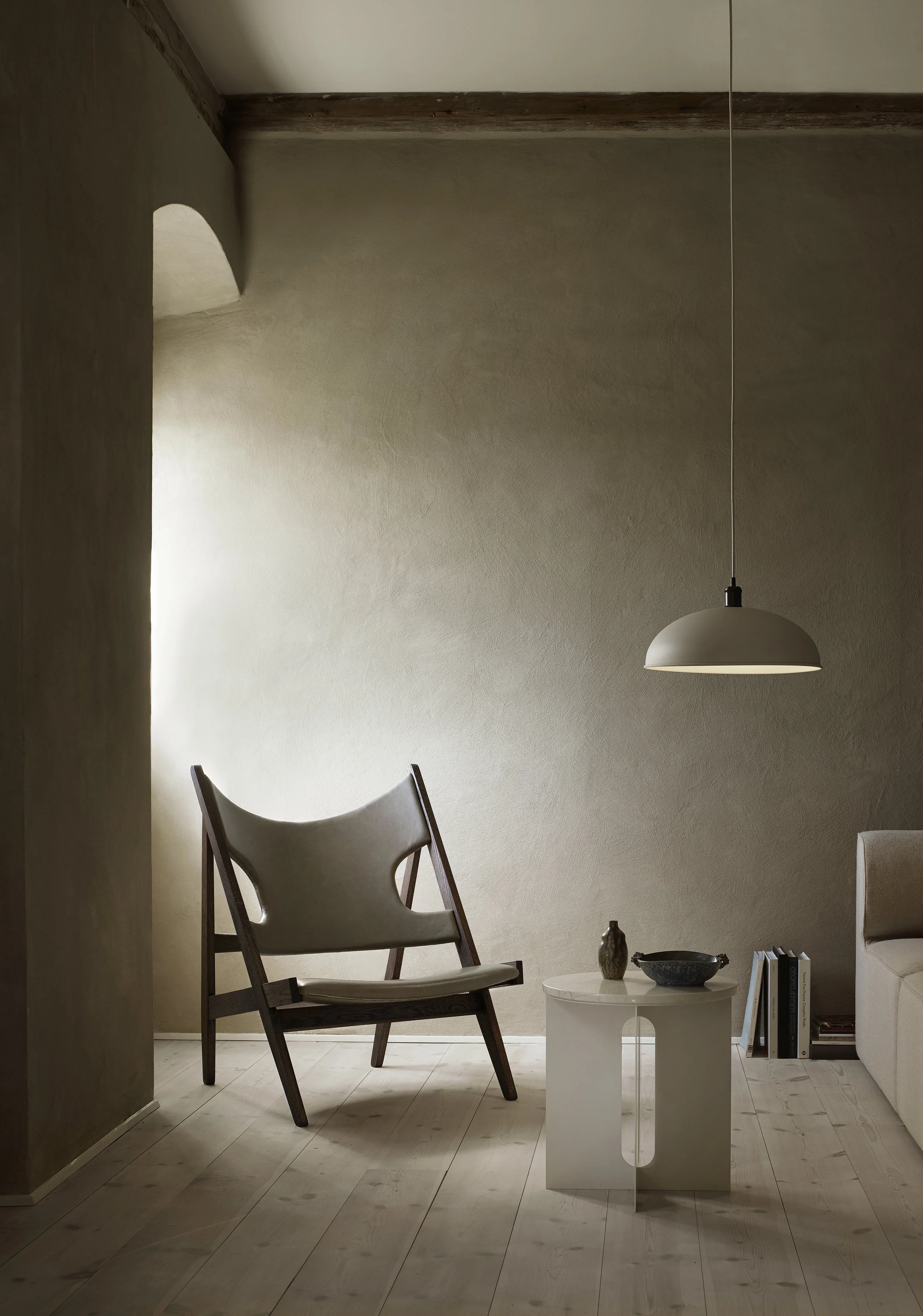
As well as the most luxurious rooms in the world.
The Audo - a new hybrid space from Menu | These Four Walls blog
It is described as baroque mulch and organic drab.

It is the exact nail color I want on my nails to carry me through the Fall and Winter Seasons.

Compost

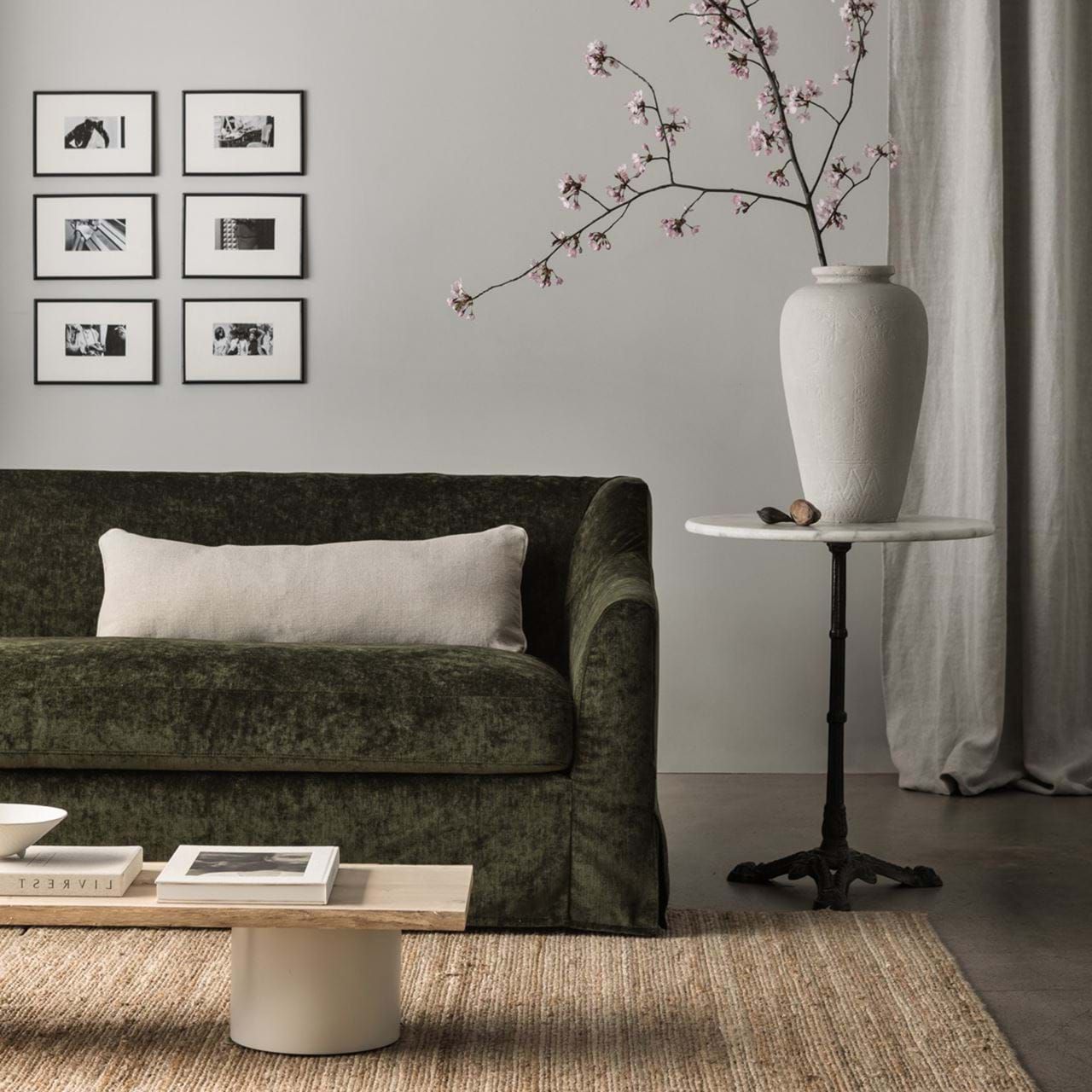
I have had the pleasure to have been #gifted a bottle of polish and have already tried it on myself. It is the third in my J. Hannah Polish collection- along with Patina and Miso. It pairs quite nicely with all the J. Hannah silver jewelry too (The Pearl Demi Signet recently replaced my wedding ring. Meanwhile the Form Hoops I is my daily earring and I carry a tiny milled Emax tooth in my Objet Pendant.) One thin, watery coat makes for a limey-green moss color, not far from the olive trees lining Jenni Kayne’s home. Two coats adds a smidge of brown, similar with the photograph above, complimenting the color of ground coffee beans. Three coats, though, is my favorite. The color of MENU Space’s NoNo Coffee Table, Nordic Knot’s Norr Malarstrand 01 Rug, and Bemz’s Zaragova Vintage Velvet in Olive Green. The color pairs nicely with black, brown, cream, and rustic terra cotta orange and reds. It is, in my opinion, the jewel tone of today’s modern world, as our field of acceptance and inclusion expands, in a year when it becomes most necessary to make the ugliest of circumstances beautiful. Iykyk.

Compost

Travel: Hiking Anastarpi to Hellnar, Iceland

This post may contain affiliate links. Please see my disclosure to learn more.

Anastarpi and Hellnar are tiny towns located in Snaefellsnes National Park on the western coast of Iceland. When I say tiny towns, I really do mean a few homes, at best. Remotely located on the coastline, there are a lot of great views to be had on the cliffs, which are teaming with seabirds, jagged rock, and strands of beach.

SIDE NOTE: There is a hike that extends all the way from Hotel Budir to Hellnar (which no one EVER talks about) that we did not get to add to our itinerary (because we simply did not know about it before hand and did not allocate enough time) but it tops my bucket list for our return to Iceland. Even now, as I sit in the comforts of my home trying to google information about the hike through Budahraun Natural Reserve, I cannot glean any information. The only evidence of such a hike is an AllTrails suggestion. According to my travel notes, it is a 6-8 hour trek that begins at Hotel Budir (you will see a sign plus the trailhead starts after Budakirkja Church). Thankfully, I took a photograph of the sign.

There will be a river crossing but if you want to avoid getting wet, you can cross it on the road above the trail. The tail end of this long hike is the one I will write about today, which spans from Anastarpia to Hellnar.

Hiking Anastarpi to Hellnar

It takes about one hour to hike from Anastarpi to Hellnar. When I say the towns are tiny, I really do mean tiny. I can count on my fingers and toes the number of buildings present in Anastarpi. There are less in Hellnar. The hike is easy, and goes along the coastline. We drove to Anastarpi around 10am and parked at a lot in front of the restaurant. Tour buses frequently park here so I would come earlier rather than later to snag a spot. I would suggest walking around the area first before starting this hike.

At Anastarpi, there is this giant stone statue called Bdar Saga. It is worth looking at and reading the sign.

From far away, he looks like a guardian standing over the city for protection.

Or a lonesome stranger sitting in nature.

There are also cliffs from which to birdwatch.

My favorite view was this stone bridge.

To the east, there is a trail that I am sure connects to the hike originating at Hotel Budir. Head towards the lake and onwards if you wish to go that way.

The view of Anastarpi. Beautiful green grass, colorful buildings, a blue lake, and birds everywhere. This is the perfect bird watching place!

The hike to Hellnar is to the west. Once you’ve had a chance to look around, I would start walking west and you will approach a gate that’s meant to stay closed. This is the mark of the trailhead. Don’t let the gate deter you, it is open.

The trail is mostly through volcanic rock terrain. Hiking boots are not a necessity, but if you are curious, this is what I wear on every hike when I travel:

Mikey moving along the trail.
A boy looks into a hidden cave.
When you get to this boardwalk, you know you are approaching Hellnar.

At the end of the trail, once you reach Hellnar, there is a cute cafe situated on the coastline. It isn’t fancy, by any means, which adds to its charm. I highly recommend stopping here to grap a cuppa and a snack. They make really good waffles. On a rainy or snowy day, you can cozy up inside, but we preferred the outdoor views, even with the overcast weather.

They were generous with the house-made whipped cream.
On the way back, we were surprised to find this brightly colored home. Which goes to show that turning around to see from whence you came is always a good idea.

We headed back to Anastarpi after our coffee pick-me-up and arrived shortly after lunch-time. There is a pizza place and a burger joint. I highly recommend the pizza place, although it is a bit pricier than the burger spot across the street. But the pizza was the perfect lunch after our hike!

So how do I rate this hike? The hike was an easy one with mild views. It was not my favorite trek but it is good for children and older folks who wish to do a bit of jaunting while in Snaefellsnes National Park. I think I would have enjoyed it more if I had connected to it from Hotel Budir. As I said before, we’ll save that for next time!

If you enjoyed this post, subscribe to my newsletter to receive all things travel! Notifications of newly published travel guides, itineraries and tips will be delivered directly to your inbox.

Travel: A Facial SkinCare Kit with Symbiome

This post is sponsored by Symbiome, a new skincare company on the block, using 100% natural ingredients in the most minimal way possible to deliver maximal results.
It used to be that when I traveled, I packed nary a skincare product and relied heavily on those supplied by the AirBNB or hotel that we were staying at. However, at my most recent adventure, a new skincare company, Symbiome, offered to send me off with their jetsetter kit called The Journey. Packaged in tiny quantities, I was easily able to stash it in a TSA approved Ziplock bag and bring it with me to Iceland. Considering the tiny bottles, I was sure that it wouldn’t last me the ten days abroad. To my surprise, I had enough to bring back and now that I am packing for a trip to Spain next week, I find myself placing it in my suitcase once again.

This kit is the perfect kit for minimalists wishing to carry on a facial skincare routine en route. The Journey kit from Symbiome includes the Reset Cleanser, The One Moisturizer, and the post-biomic oil called Recharge002. The balanced collection keeps my skin clear, hydrated, and glowing as if I hadn’t just spent fifteen hours in a dry, air-conditioned aircraft. Allow me to momentarily dissect its contents.

The cleanser comes in a plastic pump bottle and is in foam form. 2-3 pumps is enough and I massage it on for about ten seconds. It is extremely gentle on the skin, washes off quite easily. It easily removes the SPF sunscreen I wear, as well as my mascara, without needing makeup remover. It leaves my skin feeling fresh, and it smells good to boot – fresh, herbal and invigorating.

The moisturizer is thick in consistency. It is very rich, but does not leave a heavy feel to my face. A little bit goes a long way. It’s calming to put on, smelling of milky vanilla, and I seal it with the oil which supposedly bolsters collagen production. That’s good for me, since I don’t take my collagen daily supplements while traveling. It also improves skin tone and texture. I feel a firmness in my skin after having used it. Lastly, Symbiome boasts its soothing abilities for sun-exposed skin, something I could certainly use after a day of hiking in the mountains and traipsing in the city. The oil feels crisp, and I use about 3-4 drops administered to my palms prior to pressing it onto my face and neck. If you’d like to make the set last longer, the moisturizer and the oil can be used separately, depending on your needs.

These are definitely minimalist essentials for someone on the go. I liked this new company’s products, and would highly recommend The Journey set to anyone wishing to travel this summer.

Note: Mike and I also carried along this Arrival travel set from Aesop, and shared it on our ten-day trip in Iceland. It was enough for two. This is an affiliate link and will help support this space as I earn commission everytime someone makes a purchase with this link. As always, thank you for supporting companies that support this blog.

Simple Things: Dressing Up Tables

This post is sponsored by Piglet in Bed. They make linen bedding as well as tableware products, and they have made my natural linen tablecloth dreams come true. I chose an oatmeal hue to match our charcoal gray linen napkins, gifted to us on our wedding day. The linen tablecloth is made from natural stone-washed French flax, and are absolutely soft. They haven’t yet shrunk, although as a general rule of thumb, I hang all my linens (napkins, couch covers, bedding) to dry.

I am not one for frills, but I occasionally dabble in dressing up tables for the sake of adding a little extraordinaire to our otherwise simple and mundane lifestyle (not at all insinuating boring or sad – we are quite happily mundane after all). And when I say dressing up tables, I duly mean throwing a textured linen tablecloth over the well-loved, heavily dinged farm table that we salvaged from our wedding, and then calling it a day. Or rather, an indoors picnic, a festive party, et cetera. I festoon upon said linen tablecloth all the ceramic pottery we own from our ever-favorite, East Fork Pottery, and the traditional cafe glasseware that I bought from Ikea, having upgraded my water glasses with a spare $20, after drinking from hand-me-downs for over a decade. We really are on the come-up.

Jokes aside, I count the linen tablecloth as a necessity in a minimalist’s arsenal – not because I feel like tables must always be dressed, but because it is a nice way to switch the look (and feel) of a space without having to buy an entirely new table. To think that folks of my generation and age-group don new dining tables in a similar fashion by which they don new clothing makes me, at-once, weak at the knees. Forgoing all of that in lieu of paying back student debt quicker, I rely on what my mom’s generation used to make mess-cleaning easier. What once was a brown setting is now a rustic bone. Tablecloths stash quite nicely, folded, in the tiniest spaces, and look just as good pulled from their hiding in all their crinkled glory as they do ironed and steamed to perfection. That, and the argument that linen tablecloths are multi-functional and earn their keep in our already tiny home.

Here, a repertoire of all the things tablecloths can be.

  • A vintage linen blanket on a bed. Parachute ones sell at over $200 a pop.
  • A picnic rug, if you don’t mind the grass stains.
  • A backdrop for still-life photography.
  • A means for an escape route from the second story, in case of a fire.
  • A make-shift curtain, to separate spaces or to keep nosy eyes out. Erin Boyle shows the way.
  • A hammock for a cat (we have yet to try this one out).
  • A knapsack for all your farmer’s market finds.
  • A rug, for when you want to repot your plants but wish to make the clean-up a tad easier.
  • An outdoor canopy on a small-city balcony.
  • A couch cover, on days when you dog-sit.

And when it’s lived it’s last breath, here’s a few ideas of what they can become.

  • A table runner, if only a portion is left unstained.
  • A set of napkins, cut into squares and sewn around the edges.
  • A patch on a quilt, because linen quilts have made a come-back.
  • A number of dish cloths.
  • A bib for toddles and babies.
  • A shirt, if you know how to sew.
  • A scarf, because it’s just the right length.
  • And lastly, fabric for a re-upholstery project, perhaps on a dining chair?